
Liquids
Discover the flowing state of matter.
Understanding Liquids
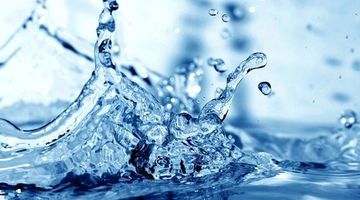
Liquids are a state of matter characterized by their ability to flow and take the shape of their container while maintaining a fixed volume. Particles in liquids have more freedom of movement than solids but remain close enough to maintain cohesion.
Common examples include:
- Water (H₂O)
- Oil and Petroleum
- Mercury (at room temperature)
- Blood and Body Fluids
- Liquid Nitrogen (at very low temperatures)
Key Properties of Liquids
Surface Tension
Creates a "skin-like" surface allowing some insects to walk on water and droplets to form.
Viscosity
Resistance to flow, varying with temperature and molecular structure. Example: honey vs water.
Capillary Action
Ability to flow against gravity in narrow spaces, essential for plant nutrition.
Cohesion & Adhesion
Forces between liquid molecules and between liquids and other materials.
Liquid Behavior
Temperature Effects
- Higher temperature decreases viscosity
- Affects surface tension
- Changes evaporation rate
Pressure Response
- Nearly incompressible
- Transmits pressure equally
- Affects boiling point